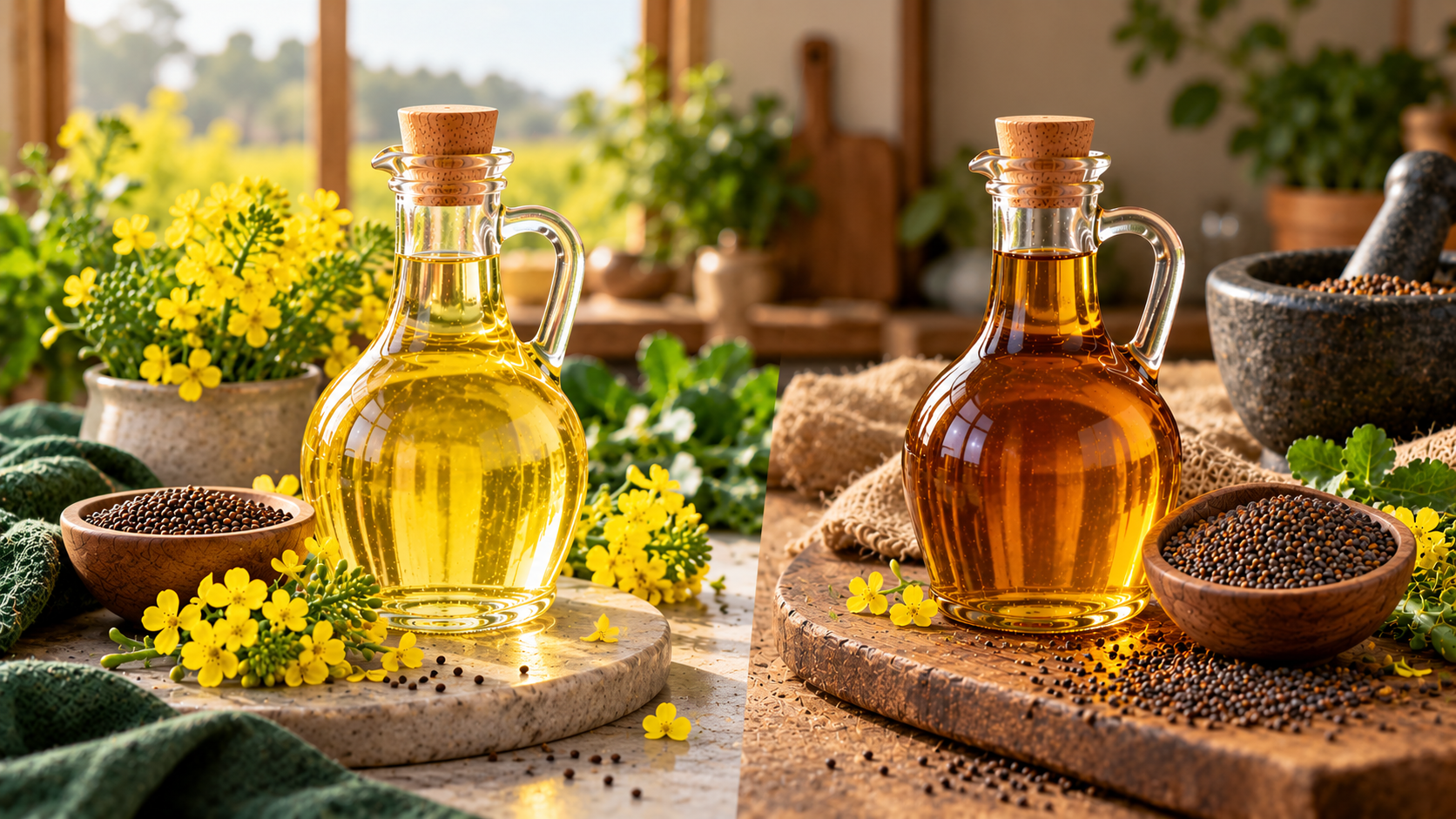
Canola Oil vs Sunflower Oil is a question many Pakistani shoppers ask while trying to make informed choices about food. This ORGIVA Foods guide explains the practical nutrition angle, important limitations and everyday ways to use canola oil without unrealistic promises. Food choices should be based on your needs and the balance of your whole diet, not on a single viral claim.
What to know about Canola Oil
Both oils can fit into balanced diets. Standard sunflower oil and high-oleic sunflower oil differ considerably in fatty-acid profile; canola has its own mix of monounsaturated and polyunsaturated fats. There is no single winner for every use.
Key points at a glance
- Different sunflower varieties
- Saturated versus unsaturated fats
- Flavour and heat
- Reading labels
How to use it in Pakistani meals
Look at the specific oil type, nutrition panel, intended cooking temperature and quantity used.
Safety, portions and realistic expectations
Avoid blanket claims that all sunflower oil or all canola oil is harmful.
Nutrition research often looks at overall patterns and groups of people. Individual responses vary. This article provides general food information and is not a diagnosis or substitute for personalised medical care.
Choosing and storing quality ingredients
When shopping for canola oil, review the package label, ingredients, storage instructions, best-before date and seller information. Keep the product sealed and follow the pack’s storage guidance. If a quality claim such as organic, cold-pressed or laboratory-tested matters to you, ask for supporting verification.
Explore ORGIVA Foods
If you want to include canola oil in your meals, explore ORGIVA Foods at origivafoods.com and check the current product information before ordering.
Frequently Asked Questions
Clear answers to common questions about this article.
Taste the Difference of 100% Pure & Chemical-Free Staples
Cold-pressed oils, fresh chia & flax seeds, crunchy pumpkin seeds, and raw herbal roots delivered with care across Pakistan.

